
Countries
Compare national business environments, demand conditions, sector relevance, operating constraints and expansion implications.
Geographic intelligence
GlobalBusinessHQ organizes business intelligence around the decisions that precede revenue growth: where to compete, which demand signals matter, who shapes the market, what constraints can block execution, and which opportunity deserves deeper analysis.
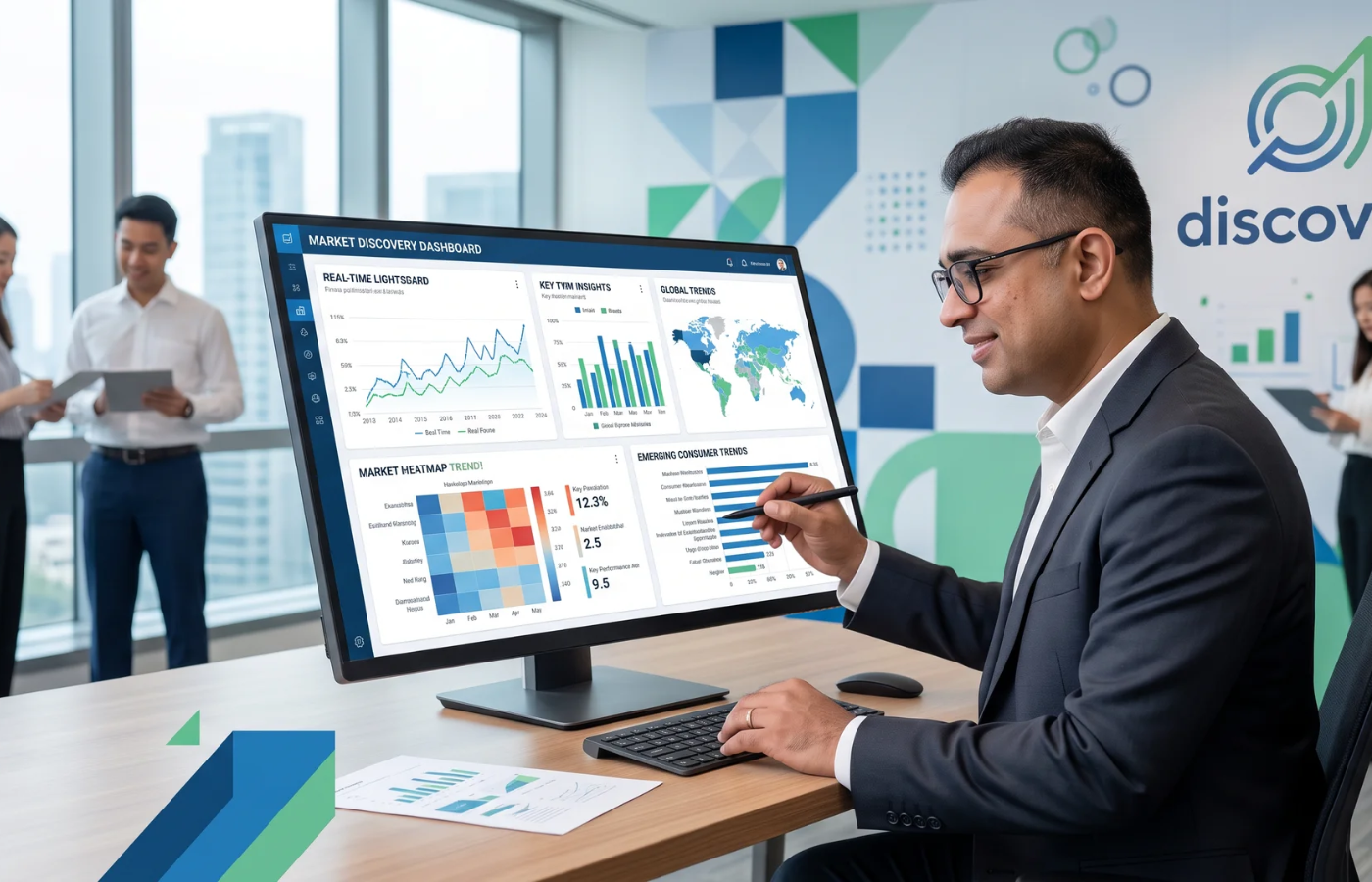
Strong business intelligence is not a pile of market facts. It is a structured view of entities, relationships, constraints and options that helps a decision-maker move from uncertainty to an actionable next question.
Compare national business environments, demand conditions, sector relevance, operating constraints and expansion implications.
Geographic intelligenceUnderstand commercial hubs through local industry concentration, customer access, partner ecosystems and operating context.
Location intelligenceExamine demand drivers, buyer problems, business models, competitive structures, sales channels and geographic opportunity.
Sector intelligencePlace individual companies inside their market, industry, business-model and competitive context instead of treating profiles as isolated facts.
Entity intelligenceDefine the customer need, competitive field, route to market, commercial constraints and evidence required before committing resources.
Market intelligenceConnect geography, industry, buyer need and execution capability to identify where further research or a commercial test may be justified.
Opportunity intelligenceThe strongest research process reduces uncertainty by defining the decision first, then gathering only the evidence needed to compare realistic options.
Define our decision problemBusiness intelligence for growth decisions is the disciplined process of converting market, company, industry and geographic information into a smaller set of defensible commercial choices. The useful output is not simply “more data.” It is a clearer answer to questions such as which market should receive attention first, which customer segment is commercially attractive, which route to market is plausible, which competitor or partner changes the decision, and what evidence would justify moving from research to execution.
GlobalBusinessHQ therefore treats intelligence as a decision system. A country page, city page, industry page or company profile should explain how the entity changes a real business choice. The same principle applies to research reports and opportunity pages: each should help a user compare options, understand constraints or identify the next evidence required.
| Decision question | What to investigate | Why it matters |
|---|---|---|
| Where is the opportunity? | Geography, customer problem, demand context, industry structure and commercial timing. | Prevents a broad market label from being mistaken for an actionable opportunity. |
| Who controls access? | Customers, distributors, platforms, partners, incumbents, regulators and other gatekeepers. | Shows whether an attractive market can actually be reached through a viable route. |
| What creates advantage? | Positioning, capability, cost structure, speed, specialization, relationships, data or technology. | Tests whether the company has a reason to win rather than merely a reason to enter. |
| What could block execution? | Commercial constraints, regulation, procurement, local requirements, channel economics and organizational readiness. | Separates theoretical attractiveness from practical feasibility. |
| What evidence would change the decision? | Primary data, customer validation, competitor evidence, pricing evidence or operational proof. | Focuses research on uncertainty that is genuinely decision-relevant. |
| What is the next reversible step? | Pilot, customer interviews, partner outreach, pricing test, market visit or deeper diligence. | Moves from analysis toward controlled learning without requiring an immediate full commitment. |
A recurring error in expansion strategy is to treat an attractive market as automatically attractive for a particular company. The two questions are different. Market attractiveness concerns the external environment: customer need, demand conditions, competitive intensity, market accessibility and the broader operating context. Company fit concerns the internal side: capabilities, brand position, product suitability, sales model, economics, partnerships and the ability to execute in that environment.
A sound decision compares both dimensions. A market can appear attractive but require a route to market the company does not possess. Conversely, a company may have strong capability in a market that appears smaller but offers a clearer customer problem, more credible access or a better strategic fit. The practical implication is that opportunity assessment should not end with a market ranking; it should connect the external opportunity to the company’s execution model.
| Market attractiveness | Company fit | Interpretation | Likely next step |
|---|---|---|---|
| High | High | Priority candidate for deeper commercial validation. | Test customers, economics, channels and execution assumptions. |
| High | Low | Potentially valuable, but capability or access gaps may dominate. | Identify partners, capability-building options or reasons to defer. |
| Low | High | Execution may be feasible, but the opportunity may not justify focus. | Compare with alternative markets or narrower segments. |
| Low | Low | Weak current case for resource commitment. | Monitor only if a specific trigger could materially change the decision. |
GlobalBusinessHQ can help structure the decision around the evidence that matters: market attractiveness, company fit, route to market, risks, commercial constraints and the next validation step.
Build a focused intelligence briefThese intelligence dimensions become more useful when they are linked rather than researched independently. A country establishes broad operating context. A city may reveal the actual commercial hub, talent pool, partner concentration or customer access. An industry page identifies the demand structure and buyer logic. Company intelligence shows the actors shaping competition, distribution or partnership possibilities. Market and opportunity analysis then combines these layers around one decision.
This relationship-first approach prevents a common problem in research libraries: hundreds of disconnected profiles that are individually descriptive but collectively weak. A user evaluating a new market should be able to move from the country context to relevant cities and industries, then to company or opportunity intelligence, and finally to the growth problem or implementation resource that helps decide what to do.
Not every visible signal is equally useful. Intelligence should give more weight to evidence that changes a decision. Customer behavior, purchasing structure, distribution access, pricing logic, regulatory requirements, competitor moves, company filings, official statistics, partner availability and operating constraints can all be relevant depending on the question. Trend commentary, social attention or headline activity may provide context, but they should not automatically be treated as proof of commercial attractiveness.
The correct evidence set therefore depends on the decision. A company entering a regulated industry may need official regulatory and licensing information before a market-size estimate matters. A B2B company with a partner-led model may care more about channel structure and partner economics than about broad consumer indicators. A company evaluating a city may need evidence about the local commercial ecosystem rather than country-level averages.
If one unresolved issue could make the entire strategy unworkable, investigate that issue before spending time refining secondary assumptions. This can be called the bottleneck-first rule. For example, if market access depends on a local partner, the research should first establish whether suitable partners exist and whether the economics are plausible. If customer willingness to pay is uncertain, early pricing and customer evidence may be more valuable than a detailed competitor inventory.
Research reduces uncertainty; it does not eliminate it. Published information may be incomplete, company-reported information can reflect the reporting entity’s own interests, market estimates may rely on different definitions, and fast-changing industries can make static data stale. Strategic choices also depend on company-specific facts that public research cannot observe, including leadership priorities, internal capabilities, risk tolerance, financial constraints and implementation capacity.
For that reason, GlobalBusinessHQ distinguishes research from recommendation. A public intelligence page can frame the market, identify decision criteria, surface evidence and show trade-offs. A tailored advisory process can then incorporate the company’s own objectives and constraints before recommending an execution pathway. Neither layer should imply certainty that the available evidence cannot support.
Some market decisions require specialist legal, intellectual-property or technology research beyond the broad commercial scope of GlobalBusinessHQ. Relevant pathways include the following resources when those issues are material to the decision:
Begin with the decision you are trying to make, not the category you want to browse. If the decision is geographic, start with country or city intelligence. If the uncertainty concerns demand, competitors or buyers, start with an industry or market lens. If a named organization is central to the decision, use company intelligence to understand its role in the wider market. If the question is whether a combination of market, industry and company capabilities creates a viable opportunity, move toward opportunity analysis.
The next GlobalBusinessHQ intelligence layers will expand these dimensions into dedicated country, city, industry, company, market and opportunity hubs. Each child page will be required to solve a more specific user need than this master hub, use distinct evidence and link back into the wider decision graph rather than functioning as an isolated profile.
GlobalBusinessHQ now treats conferences and technology events as a scalable research category alongside countries, industries, companies and markets. Event pages connect agendas, speakers, exhibitors, technology themes and post-event implications to business decisions.
Browse current and future event clusters, with structured links to agendas, speakers, exhibitors, themes, business opportunities and future-impact analysis.
Explore the first full event cluster covering AI, cloud, cybersecurity, data centres, DevOps, quantum, robotics and related commercial signals.
Use programme structure and session themes as a signal of where enterprise technology demand, investment and buyer attention may be moving.
Share the market, industry, company or growth decision you are evaluating. The next step can be a focused intelligence brief built around the uncertainties that could materially change your choice.
Discuss the intelligence decisionTrack agendas, speakers, exhibitors, technology themes and future business impact across major global conferences.
Explore Event IntelligenceResearch-led guidance for market expansion, enterprise AI investment and technology commercialization.
U.S. Technology Market Entry for International Companies · Enterprise AI Transformation Consulting and Implementation Strategy · Technology Commercialization and Product-Market Fit Strategy · Enterprise AI ROI and Investment Prioritization ·Compare vendor capabilities, procurement trade-offs, production readiness and consulting pathways.
For Global Business Intelligence, the specific decision in the industry ai decisions and international commercialization stage should begin with specific customer use case and economic buyer. The buying organization should document its own baseline, decide who can authorize the work, and compare an incremental improvement with a full platform change. Before committing capital or selecting a supplier, test workflow integration, data permissions and deployment ownership against the exact workflow under consideration. A useful decision record identifies the accountable owner, required evidence, unresolved assumptions and a stopping criterion. Measure validated pilot outcomes and total cost during a bounded pilot; do not assume that a vendor demonstration, forecast or headline metric establishes operational success. Where a cross-border delivery model is involved, identify the specific contracting entity, service location and approval route rather than assuming the same deployment requirements apply in every market.
For Global Business Intelligence, the specific decision in the enterprise ai market, procurement and expansion research stage should begin with specific customer use case and economic buyer. The buying organization should document its own baseline, decide who can authorize the work, and compare an incremental improvement with a full platform change. Before committing capital or selecting a supplier, test workflow integration, data permissions and deployment ownership against the exact workflow under consideration. A useful decision record identifies the accountable owner, required evidence, unresolved assumptions and a stopping criterion. Measure validated pilot outcomes and total cost during a bounded pilot; do not assume that a vendor demonstration, forecast or headline metric establishes operational success. Where a cross-border delivery model is involved, identify the specific contracting entity, service location and approval route rather than assuming the same deployment requirements apply in every market.
New research pathways with distinct buyer, implementation and geographic decisions.
Continue from this topic to its parent hub, related decision guides, and the complete research directory.